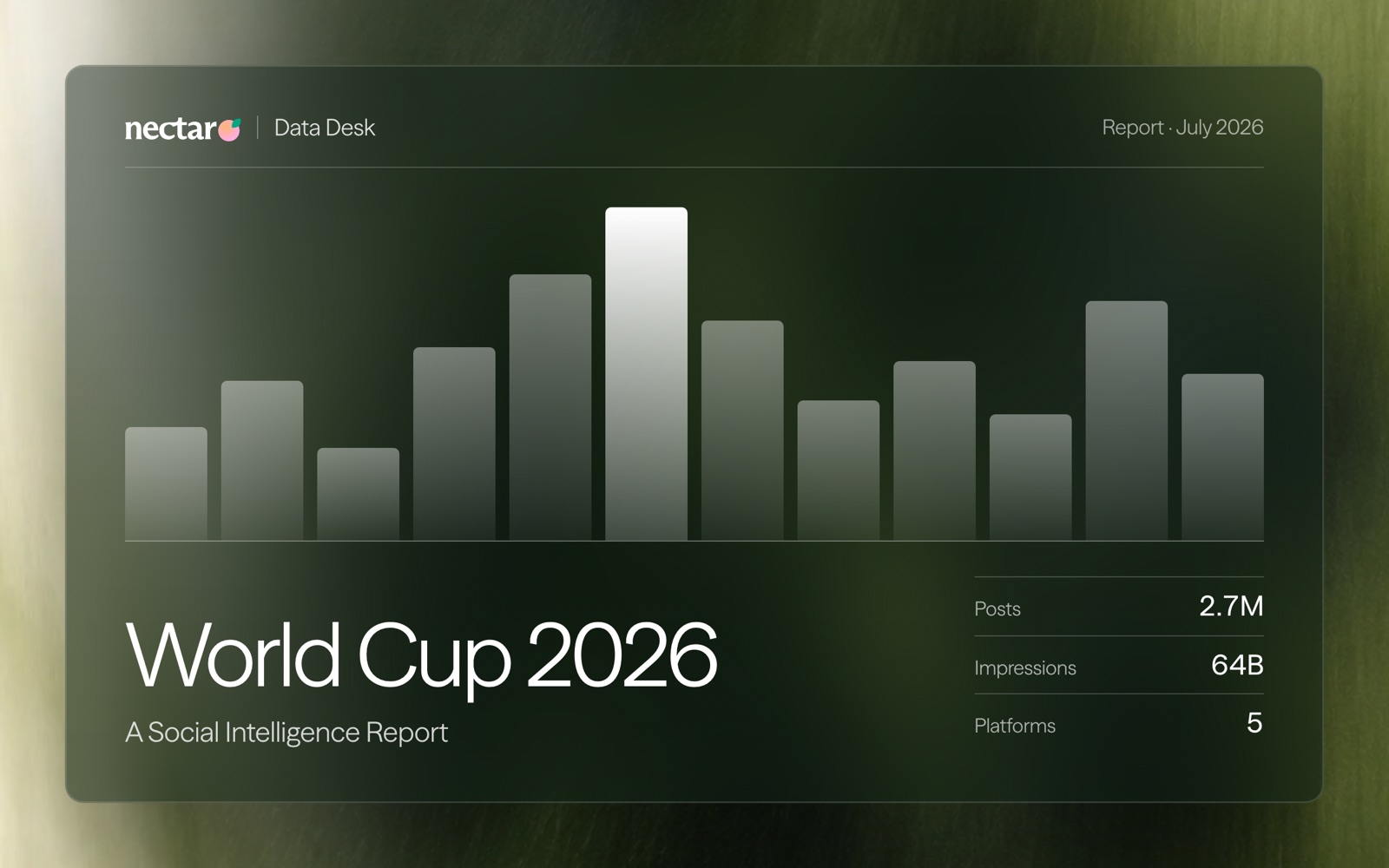
Key insights
- 4 of the top-performing brands were non-sponsors.
- Creator-led content outperforms celebrity-led content by about 2:1 on socials.
- Messi generated 90X the social reach of America’s top player.
Introduction
The 2026 World Cup is the most expensive tournament in history for marketers and fans alike. FIFA is bringing in $2.8 billion from sponsorships this cycle, more than four times what it collected twenty years ago, and the most expensive group-stage tickets jumped from $220 in 2022 to $575 today. Meanwhile, the audience is moving: viewership on FIFA’s own social platforms is up 485% versus 2022, splintered across algorithmic feeds where no two fans see the same tournament.
So the question for brands is no longer “How do we get in front of the World Cup audience?” It’s “Where is that audience, what do they care about, and how do we keep their attention?”
To answer it, we analyzed more than 2.7 million pieces of World Cup content across TikTok, Reddit, Instagram, YouTube, and X, generating over 64 billion impressions. What emerged is a map of the culture that the most successful brand activations lived inside. The World Cup is a vehicle of massive potential energy, one of those rare cultural moments that aspires to monocultural status. The brands that best converted that potential energy into kinetic energy for their bottom line were the ones who understood where the cultural pulse is.
Marketing insights
Adidas wins World Cup brand activation
Brands spend tens of millions of dollars to become official World Cup sponsors, but does that investment actually translate into attention on social media? To find out, we compared a mix of official sponsors, licensees, and non-sponsors, measuring each on three axes: reach, engagement, and earned media value. The results complicate the assumption that a sponsorship badge guarantees cut-through and point to who’s really winning the conversation. Play with the data yourself!

A few key insights:
- Non-sponsors often outperform sponsors. Many of the top engagement-earners after Adidas are non-sponsors or licensees, like Levi’s, Nike, and LEGO, each beating official sponsors like Coca-Cola, Qatar Airways, and Aramco. Prediction-market startup Kalshi generated massive organic reach early in the tournament, then signed a co-branding deal with sponsor ADI Predictstreet.1 A nine-figure sponsorship fee buys a logo, not guaranteed cut-through.
- The brands that buy the most eyeballs are rarely the ones earning the most attention. Reach, engagement, and value don’t move together: Coca-Cola pulled ~250M views but engaged at just 1.3%, while Puma reached a fraction of that (~2M) at 6.2%.
- Adidas is king of the World Cup. Adidas wins on every axis at once, pairing its on-pitch product advantage with a creator-led content playbook. It’s the exception that proves sponsorship still works when you actually activate it.
Creators outperformed celebrities
The 2026 World Cup has been inescapably celebrity-driven on television (see: the Beckham-saturation think pieces in the Guardian and Forbes). This raises a natural question for brands: does celebrity star power translate into value on social media? Comparing earned-media performance of celebrity endorsements against creator partnerships across the tournament suggests that on social, creators are a stronger, or at minimum more cost-effective, strategy for driving engagement.
- Creators win on reach, by huge margins. Across top-performing sponsored posts, median views for creator partnerships were 929K, compared to 573K for celebrity endorsements.
- Comparing two top posts in each category places this in stark relief: Thierry Henry and David Beckham for McDonald’s ($211K EMV, ~4M views) vs. a Kalshi creator partnership ($291K EMV, ~126M views).
- Creators win on value, not just volume. Ten of the top 15 posts by EMV are creator-led, and their median value is also higher ($62K vs. $56K).
- Airbnb is the clearest example of this phenomenon: its top celebrity post with Abby Wambach (co-posted with Visa) generated $112K EMV on 23.4M views. In contrast, a creator-led World Cup ticket giveaway sponsored by Airbnb generated $408K EMV on just 11.8M views. The pattern even holds at a smaller scale: Trevor Noah brought in $62K EMV while another creator ticket giveaway brought in $126K.
- Instead of dropping celebrities, though, the most successful play is to use creators as the distribution layer for celebrity payoff. Adidas functions as a case study for this.
- Adidas’ 5-minute short film “Backyard Legends” (featuring Messi, Timothée Chalamet, Beckham, Bad Bunny, Zidane) earned 6.5M views on Adidas’s own TikTok; creator BABOY posting the same ad brought in almost 12.7M.
- Adidas also ran a hybrid model during the World Cup, combining creator and celebrity talent. The creator carries the audience, and celebrities are the payoff. For example, John Nellis’s Adidas bus tour teases “the best thing is hiding behind this door” before a Paul Pogba reveal; Adidas × @elefutbol turned Lamine Yamal’s first Spain goal into native, fan-feeling content featuring Yamal himself alongside @elefutbol: 2.2M likes, 11.7M views.
Creator partnerships pulled a median 929K views. Celebrity endorsements: 573K.
Five creators who ran successful brand activations during the World Cup, and why they worked:
126M+ views (top post)
A sports-betting creator whose match-prediction and reaction videos routinely go mega-viral. One of the engines behind Kalshi's "fewer creators, huge ceilings" strategy.
1.3M likes
A feel-good/philanthropy creator known for surprise giveaway content. Airbnb bought a slot inside his already proven storytelling format where the WC ticket is the payoff.

~2M views
Niche prediction-market voice already trusted in the space, turning normal betting commentary into #PolymarketPartner content.
6.7M views
Charles & Sylvia are a reliable brand-ad pair with a proven couples-comedy format. Like Airbnb and @jimmydarts, McDonald's borrowed an already-working format rather than hiring a sports creator, letting the duo's comedic chemistry carry the message.
~36% engagement rate
A Thai creator with an off-the-charts engagement rate (~392K likes on ~1.1M views) showing how a regional creator can massively out-index on engagement even without huge raw reach.
Team insights
Argentina, France, and Norway are the most positively engaged fan bases
Fan energy has two independent dimensions: how loud a fan base is (engagement rate) and how happy it is (share of positive posts). Plotting all 48 nations on those two axes and splitting at the median of each sorts fan bases into four types: Euphoric (loud and positive), Upset (loud but less positive), Quietly content (quiet but positive), and Subdued (quiet and less positive).2
Some suggestions on how to use this interactive chart:
- Can’t find your country’s flag? Search for it in the search bar.
- Want to directly compare countries? Just click the flag to freeze a country’s statistics.
- Select from the “All groups” dropdown to see some pre-designed subsets, such as countries that advanced from the group stages and those that didn’t.
Player insights
Thirteen players defined the tournament’s conversation on social. Here’s how they stack up.
The GOAT.
19.7B views 640.4K posts
Again, falling just short of Messi.
16.0B views 709.9K posts
The highest sentiment in the field. 30% of his content is humor, and he's in on the joke.
10.5B views 208.8K posts
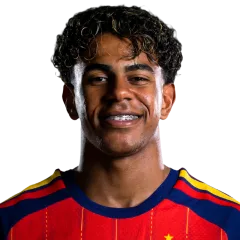
A clear rising star on the pitch and on social.
3.7B views 84.1K posts
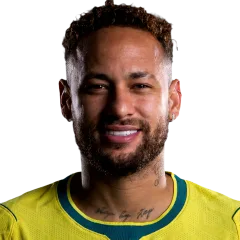
The retirement announcement drove his attentional pull.
3.6B views 70.5K posts
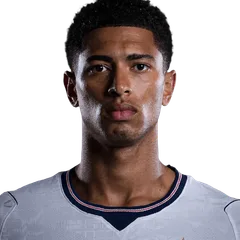
A global fan favorite. England's exit barely dented his +63 sentiment.
3.4B views 52.7K posts
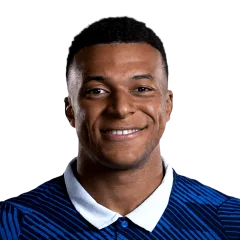
2.1B views and steady positivity despite France's semifinal loss.
2.1B views 65.7K posts
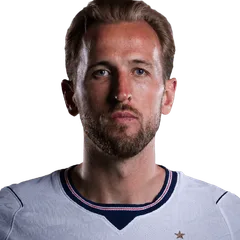
+60 net sentiment. One of the warmest conversations of the tournament.
1.5B views 31.1K posts
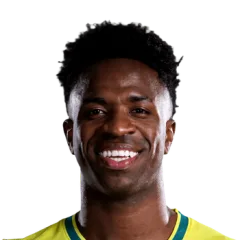
Brazil's exit soured the fanbase, but they don't seem to blame him.
1.2B views 17.8K posts
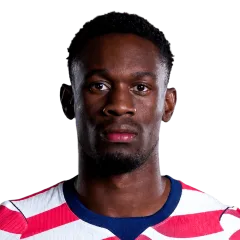
The red card controversy drove one of the most comment-dense conversations in the field: 1.2M on 1.1B views.
1.1B views 16.0K posts
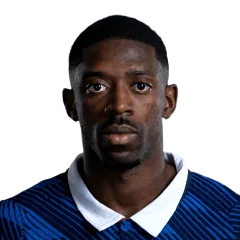
Quiet volume, but a solid 7.2% engagement rate. Attention without the noise.
447M views 16.5K posts
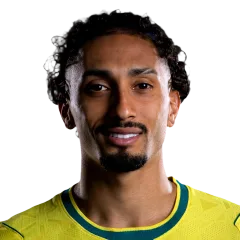
Only +9 net sentiment. Brazil's frustration personified.
241M views 12.5K posts
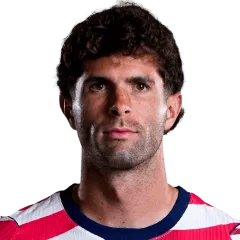
The only negative-sentiment player in our subset. The US expected more from him.
218M views 11.7K posts
Messi definitively wins the GOAT debate
In what is likely the last World Cup for both stars, we tracked how social media is arguing about two of soccer’s greats. We analyzed over 424K posts of explicit head-to-head debate content.
- Messi wins the argument. Backed by hard facts (three World Cup finals, more Ballons d’Or, 21 World Cup goals), pro-Messi content is more common and more forceful. About 71% of head-to-head content is in Messi’s favor, compared to 26% Ronaldo.
- Ronaldo wins the volume, but not the vibe. Ronaldo generates about 11% more content than Messi, but it’s less positive: a +28 net sentiment to Messi’s +33.
71% of the head-to-head GOAT debate favors Messi.
Non-sponsored brands capitalized best on Haaland’s rise
Behind Messi and Ronaldo, Erling Haaland was the most talked-about player of the tournament, bringing in over 10.5B views across more than 209K posts on all platforms. Even more interesting is how brands drafted off Haaland’s meteoric rise in attention. Nike spent $24M on a long-term Haaland endorsement, but our data shows that non-sponsored brands are punching far above their weight when it comes to Haaland content. Whereas Nike earned ~$1.5M in EMV with Haaland, Wild Bill’s Western Store (where Haaland supposedly bought $10K worth of merch) brought in $590K, and Katz’s Delicatessen (where he bought a pastrami sandwich) earned $340K.
Cultural insights
Fashion: the Style Cup
As a massive cultural moment, the World Cup serves as a lightning rod for fashion. Team arrivals, tunnel fits, kit reveals, and fan content all act as distribution engines for designers and fashion brands. Both independent designers and retail brands managed to cash in. A few highlights:
- Ibrahim Fernandez designed Ivory Coast’s travel kit, a collarless orange jacket with embellished elephants. A single positive review of the look from @johnmvilla2 drove 2.2M views and 252K likes.
- Alvin Jr. Mach created Democratic Republic of the Congo’s leopard-print suits. A few viral reviews generated >$650K in EMV on Instagram alone.
- Bershka fan hauls of its FIFA collab generated hundreds of thousands of likes.
One common format on socials is fans styling their nation’s jersey in GRWM-style content. Here are the top five winners:
Updated July 20, 2026: Added context on Kalshi’s mid-tournament co-branding deal with ADI Predictstreet and recategorized Kalshi in the brand chart.
Footnotes
-
Mid-way through the tournament, Kalshi signed a co-branding deal with ADI Predictstreet, an official FIFA sponsor, in a move Bloomberg described as “unusual.” After ADI Predictstreet pulled in “less than $100 in total trading for several matches in the first round of the tournament,” they needed to find a brand that could help them earn the total value of the sponsorship. ↩
-
Data was pulled before the quarter-finals. ↩